


16 Oct Remembering Payton: A Mother’s Journey Through Loss, Love, and Faith
In this conversation with Will Carrington, SUDC Foundation Writer in Residence and SUDC Dad to Maria and Jennifer Rose reflects on her experiences following the sudden and unexpected death of her 11-year-old son, Payton. She shares how grief has shaped her personal and professional journey, the meaningful ways others have supported her, and the important role faith continues to play in her life.
Through her reflections, Jennifer offers a deeply personal perspective on love, loss, and maintaining a lasting connection with her son.
Will: Please tell us about your son Payton.
Jennifer: Payton is my youngest of two sons. He was born only 11 months after his older brother (Jacob) and every year they were the same age for almost a month. I believe they call that Irish Twins.
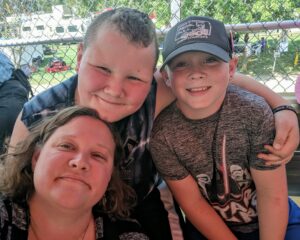
Payton was always an active child and quite the daredevil. He loved doing flips off of furniture and climbing to the top of trees. Unfortunately, this often resulted in a variety of bumps, bruises, and stitches; and at 2-years-old he had his first broken bone from jumping on a trampoline with his older cousins. Payton loved playing soccer from a very young age. I even tried coaching his team for a while, but I soon found out that wrangling a bunch of 5-year-olds that are chasing butterflies across the field wasn’t for me. However, Payton continued to love the sport, playing for the Rec. Center and later for the Newton (Kansas) Railers Soccer Club. I believe he very much enjoyed being on the team, traveling to new places, and especially winning trophies and medals with his teammates.
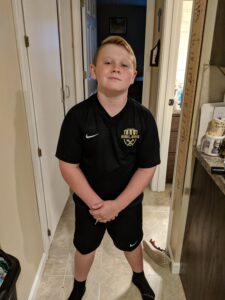
Payton also loved animals and had a kindness that came through with every person and thing that he encountered. In fact, I just recently received a message from a young man that went to school with Payton in 6th grade. He told me how kind Payton had been to him and how they developed a friendship during a very hard time in this man’s life. (I got this message nearly seven years after Payton left this world. What an impact!). Payton’s kindness also came out in big emotions, and he often wore his heart on his sleeve. This may have contributed to his Casanova-like qualities, because he was always well liked by his female friends. I remember him coming home from kindergarten and telling me about his girlfriend.
Payton was 11 years old when he left this world. A sudden and unexpected void that left a hole in all of our hearts. Despite the normal sibling rivalries, Payton and his brother Jacob were naturally close. They often did many things together; activities, sports, even birthday parties. For the first ten years of his life, we were a family of five (mom, dad, brother, and half-brother). However, life is full of twists and turns; and his father and I divorced about 18 months before he died. Unfortunately, the divorce was messy and unpleasant for everyone involved (especially the kids). I now look back and wonder if the added stress from this experience had an impact on Payton’s immune system.
Five years after his death, with the help of the SUDC Foundation and research, we were told Payton likely had influenza at the time of his death. Divorce was not the only trauma Payton had been through. Did these things affect his body’s ability to fight off infections? Just one of the many lingering questions. I cannot think of Payton without thinking about his love; the hugs he would give me; and the way he called me ‘mama’. I miss those nights of tucking him in bed, making his signing teddy bear dance, and giving each other lots of goodnight kisses.
Will: Please tell us about your Payton tattoo.
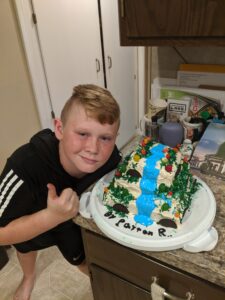
Jennifer: I knew I wanted a tattoo of Payton after he left this world. I actually have many to commemorate him, but his portrait across my forearm is the biggest (and there is a reason for that). During that first year I felt like my body was on fire, nothing felt normal. And worst of all, no one else could see how much pain I was in. I was walking around with an arm chopped off and nobody even noticed. This tattoo represented that. It’s large and noticeable and that’s what I needed early on. I needed people to see that something had happened to me, that my life is forever changed, and that I’m not the same person I was. Fortunately, this tattoo represents more than pain. In addition to Payton’s smiling face, I needed a background. Something to represent where he is now, something to give hope. I didn’t want puffy clouds and golden gates. Then a friend (a pastor) told me where the word ‘paradise’ came from. The word originated with the Persians, and what they referred to as paradise back then was the Hanging Gardens of Babylon. Just a few months before Payton died, he did a school project – an edible model of the Hanging Gardens of Babylon. I still have the picture of him standing next to his cake – and I knew what the background should be – Payton in paradise.
This tattoo continues to draw attention, which is what I needed in the beginning, and is a way for me to talk about Payton and where he is now.
Will: How has your work evolved since Payton’s death?
Jennifer: So many things have changed in the last seven years, and I have since changed jobs four times. I had previously spent much of Payton’s life working as the director of a small non-profit (Peace Connections), where we hosted weekly meetings, organized children’s summer activities, and assisted people in economic poverty. Both my children had been involved and included in this work for many years, essentially growing up in the programs, and it became increasingly difficult to enter those same rooms and areas without Payton there. In fact, his name and handprint even hung outside my office door as a piece of artwork. I also felt the urge to do something more, to somehow use what I had been through. I think we all feel that in child-loss. The desire to turn this pain (this energy) into something better – that’s why we develop fundraisers, write books, build benches and memorial gardens. The loss has to have meaning, at least that’s how I felt.
My own illness six months after Payton died also pushed me in this direction, and I decided to leave the administrative side of Social Work and pursue something more therapeutic. To be totally honest, I also just needed a change. I couldn’t continue living the life I had before; it didn’t feel the same without Payton, and I couldn’t continue pretending it did. So, I became a mental health therapist. After two years under clinical supervision and a few trials and errors, I’ve eventually landed in my current role as an intake clinician at the community mental health center and a part-time private practice therapist. For the most part, I enjoy both my jobs. Mainly because it gives me perspective and reminds me that there are many ways and reasons people suffer; I am not unique, but I can offer a level of understanding and compassion that I didn’t have before.
Will: What people were especially helpful to you in the time after Payton’s death?
Jennifer: The presence of supportive people changes so much over the years, and there are significant moments that stick out in the early days. I have to acknowledge my mother’s presence those first two weeks after Payton died. My mother was never really one for conversation, but she would always drop everything to just be present. Often, we just sat together in silence, and just having someone nearby was so very valuable. She did the same thing six months later when I got sick and took care of Jacob while I was in the hospital. My mother also left this world last year and I realize even more how valuable her presence was.
There was also support from the community. So many people attended his Celebration of Life, I think someone told me it was around 300 and there are pictures of people standing in the hallway because all the seats were full. Now, those images remain with me, as well as the brief words of encouragement that came at unexpected times (“time is so different in Heaven, someday when you get there Payton will just turn around and say oh, there you are”).
There were also the unexpected and anonymous gifts that still mean so much, even though I have no idea where they came from. During those first weeks, I remember finding a cheap laundry basket on my porch. It was full of toilet paper, hand soap, Kleenexes, and paper towels. I thought, who leaves toilet paper for a grieving parent? A week later my home had run out of toilet paper and the idea of going to the store appalled and terrified me, but I remembered someone had left some on my porch. That was probably the most memorable item I received and something I will continue to do for others early in their grieving. There was also a flowerpot left one day, with a card that said, “from your little man in the sky”. I have no idea who left it, but “little man” was often a nickname for Payton, and it meant so much to see that in writing. Even today, when my job assigned me a new parking spot and gave me number 37 (Payton’s soccer jersey number), it feels like small gifts from God and reminders of him. I should mention that his soccer team (the Newton Railers) has continued to commemorate him, as Payton’s name (and that of another child gone too soon) continue to be stitched on the back of every player’s jersey.
Will: How has your faith affected your life after Payton’s death?
Jennifer: I may be different than many of my fellow SUDC parents when it comes to not having a reason for his death. I’m really good at blaming myself (for everything), and not having a reason meant I didn’t miss anything, it wasn’t my fault. Five years later, when results from the research indicated Payton likely died from influenza, the tape started playing in my head all over again. How did I not see that? Why didn’t they test him at the doctor when we went the day before? But I know that rabbit hole never takes me anywhere good, and I have repeatedly practiced jumping off that trail when I feel myself going down it.
What has helped more than anything over the past seven years is God, faith, the belief that this world is not the end. The first question I asked the chaplain and pastors that were present was “tell me where to look, tell me the verse, I have to know that was not the last time I will see my son”. And that’s where I have leaned over the years; rather I should say, that’s what has held me up. Numerous books about Heaven, reading through the Bible multiple times, underlining and highlighting, re-writing verses and hanging them where I can see them. My favorite book in the Bible has become Hebrews, and my favorite verse has become Hebrews 12: 22-24. (Look it up if you get a chance) This is where my son is.
Will: And how has Payton’s death affected your faith?
Jennifer: It’s funny. I went to church as a child, even attended a Lutheran school until 6th grade, but faith was never really a part of my life. When I became a parent, I still felt church was important, and my family regularly attended a large church almost an hour from our home every Sunday. My son Jacob made a decision to get baptized when he was about six-years-old. Payton made the same decision when he was 11 years old, just six months before he left this world and went home. 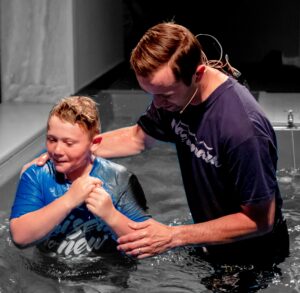
Although I walked the walk of a so-called Christian (I’m not very fond of the word, I prefer believer), I never felt any spiritual connection. But after Payton’s death and countless hours of talking to God in the middle of night, I have learned there is a difference between ‘knowing God’ and ‘having a relationship with God’. On one of those late nights, in the midst of darkness and tears, I recall hearing the words, “He is okay, he is loved, you will see him again soon”. The phrase even repeated a second time and the next morning I wrote them down.
When I shared this with a friend (a therapist), they said that it is unlikely that my grieving brain could offer this type of self-comfort, and they believed this message was from the Holy Spirit. I believe that and I continue to believe it now. If you have ever watched the series The Chosen, it is about the life of Jesus on earth and the disciples that followed him. This series came out many years after Payton died, but there is a running theme throughout the show regarding the word “soon”. They talk about the difference in how time moves here on earth compared to Heaven, and our definition of ‘soon’ may be very different from God’s. Psalm 90:4 says, “a thousand years in your sight are like a day that has just gone by. . .” I will see my son again soon. I know that, I believe that, and it is what keeps me moving forward.